
Many people think of it as a modern material, but plastic has been around for more than 160 years. Invented in Victorian times, it was first used as a synthetic alternative to natural resources.
© Me dia / Shutterstock.com
Ivory was widely used for both ornamental and practical items in the 18th century, but due to the over-hunting of elephants, it was in short supply. After plastic was invented in the 1850s, it became a viable alternative to replace ivory in applications such as billiard balls, cutlery handles and tools.
The environmental issues associated with plastics weren’t realised until more than a century later in the 1960s, when people started to voice concerns about pollution.
Who invented plastic?
English metallurgist Alexander Parkes, a prolific inventor who patented 66 new processes and products, created a celluloid thermoplastic called Parkesine in 1856. After exhibiting his plastic at the London International Exhibition of 1862, he had no idea how widespread its future use would become.
By the 1870s, Parkes’ associate Daniel Spill had developed a similar product called Xylonite, while John Wesley Hyatt was experimenting with celluloid in the US.
What were the early uses of plastics?
In the late 19th century, plastics began to replace ivory and other natural materials such as tortoiseshell, wood, stone and metal, in many applications. These included billiards, snooker and table tennis balls, buttons, cutlery handles, gaming table inlays, hair accessories, fishing reels, ornaments and cosmetic cases.
Advertising campaigns praised plastic as being the “saviour of the elephant and the tortoise”, as it saved them from being killed for their tusks and shells. Hailed as the material of the future, it could protect the natural world from destruction to meet human needs.
By the early 20th century, further research was being carried out, including the invention of a fully synthetic plastic, Bakelite, by Belgian chemist Leo Baekeland in 1907. Used as an electrical insulator across America’s new electricity network, it was heat resistant, durable, mouldable and could be mass produced.
Major chemical companies started to invest in plastics production, with celluloid supporting the growth of the cinema industry in the 1920s. The new trend for sunglasses also boosted the plastics market.
Was plastic used in World War II?
The plastics industry expanded throughout the 1930s, with the invention of nylon by US chemist Wallace Carothers in 1935 aiding the Allies during WWII. This new wonder material was used to make ropes, parachutes, helmet liners and body armour. Plastic was also used to insulate radar cables throughout the war. Aircraft windows were made from Plexiglas, with Time magazine praising the “new uses and adaptability of plastics”. Production of plastic increased by 300% between 1939 and 1945.
It had many new uses after the war such as replacing metals in automobiles, wood in furniture and being widely used as a packaging material. The global plastics market, valued at £20 million in the 1920s, increased by 3,000% to £650 million by 1943, making it one of the world’s fastest-growing sectors.
Today, the global plastics industry generates £4.5 billion annually and is still expanding.
When did concerns about plastic pollution first arise?
Concerns over the environmental impact of plastic pollution were first voiced in the 1960s. The 1962 book, Silent Spring by Rachel Carson, sparked greater environmental awareness by documenting the dangers of chemicals in pesticides such as DDT.
An oil spill off the Santa Barbara coast in California caused widescale pollution in January 1969, followed by an oil slick catching fire on the Cuyahoga River in Cleveland, Ohio, six months later. These disasters motivated changes in global policies to protect the ocean, with the environmental impact of plastics coming under the spotlight.
One of the first environmental conferences (the Convention on the Prevention of Marine Pollution by Dumping of Wastes) was held in London in 1972. The same year, the United Nations held its Conference on the Environment in Stockholm, Sweden, encouraging people to take responsibility for the damage we’re doing to the oceans.
Facts about plastic pollution
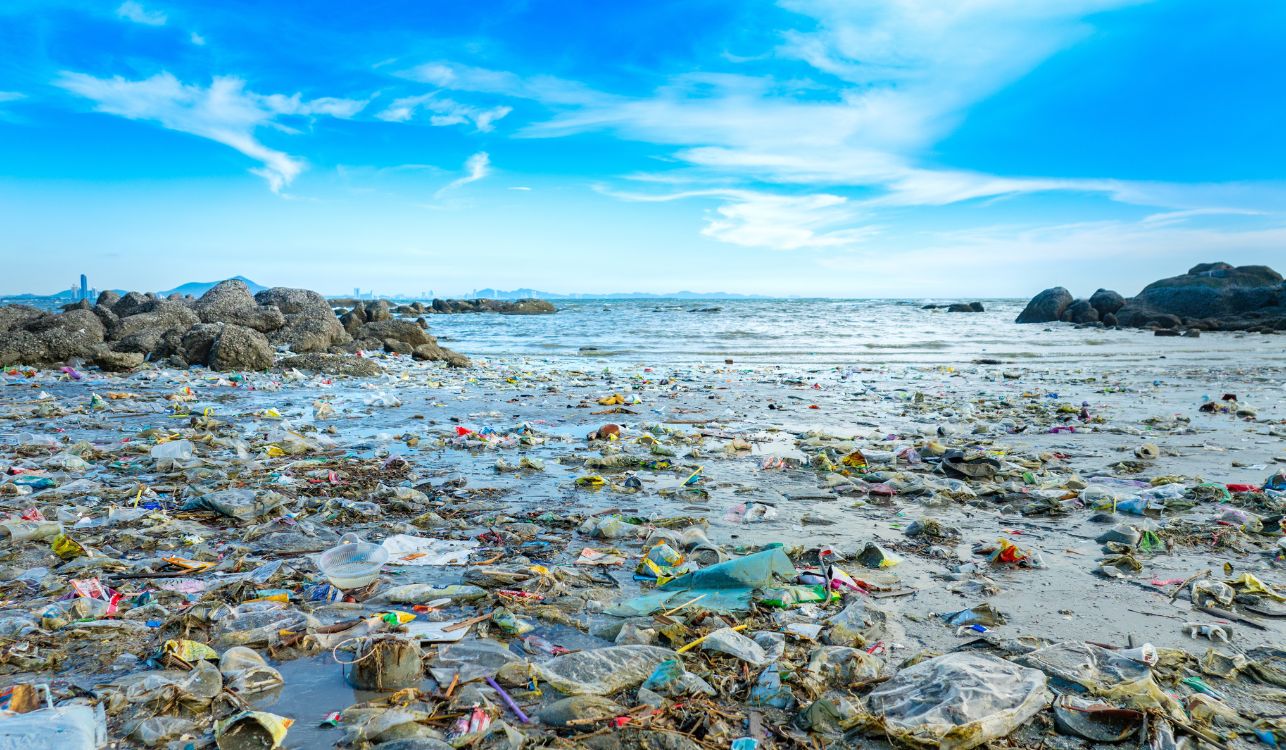
Despite concerns, the PET plastic drinks bottle was patented in 1973 to contain soft drinks, being lighter than glass to transport. Along with polystyrene food containers and polyethylene shopping bags, mass-produced PET bottles are one of the worst problems for ocean pollution.
Every year, around 500 billion are sold worldwide, with more than half ending up in the sea. It takes around 450 years for a PET bottle to decompose, gradually degrading into microplastics, which are ingested by fish and marine life, often proving fatal. Microplastics can even end up on the dinner table!
Scientific research suggests people who ingest microplastics may suffer health issues including cancer, cardiovascular disease, rheumatoid arthritis, inflammatory bowel disease, auto-immune conditions, neuro-degenerative disease and strokes.
Experts say there will be more plastic than fish in the ocean by 2050 if we continue dumping at our current rate. The World Economic Forum suggests there will be 895 million tons of fish, compared with 937 million tons of plastic waste.
Can we reduce plastic pollution?
To date, plastic recycling has remained inadequate, but several new technologies are being developed to remedy this: pyrolysis is a thermal process to break down the chemical chains in plastic into hydrocarbons to recycle or refine into fuel.
Another process, gasification, involves plastic being heated without oxygen to convert it into fuel for energy production.
Solvolysis comprises dissolving plastics in liquid to recover useful chemicals. This process is considered greener than the others, as it produces fewer byproducts and requires less heat.
As well as governments taking steps to stop plastic pollution, individuals can also do their bit. Always take reusable bags or boxes when you go shopping: a massive 500 billion throwaway plastic bags are still used worldwide annually.
Recycling bins at home and in the workplace can encourage people to think about how they’re disposing of waste.
Store reusable ceramic, glass or aluminium water bottles in the fridge to avoid adding to PET bottles ending up in the ocean. Take your own cup when you buy a takeaway coffee; most cafes will be happy to oblige.
Don’t buy takeaway meals with excess plastic packaging in supermarkets and avoid plastic straws, utensils and drinks carton lids. If you take a packed lunch to work or school, use your own utensils, rather than throwaway plastic ones.
HDPE and PETE are the most commonly recycled plastics, so choose them above other types. Avoid styrofoam and plastic bags, as they have the lowest recycling rates.