
Behind the simple ceremony, held every autumn, lies centuries of tradition dating back to ancient Britain, in the times before Roman rule began in 43 AD. In those days, communities were completely dependent on what they grew, so when all the crops were safely harvested, it was a time to pause, reflect and be genuinely grateful.
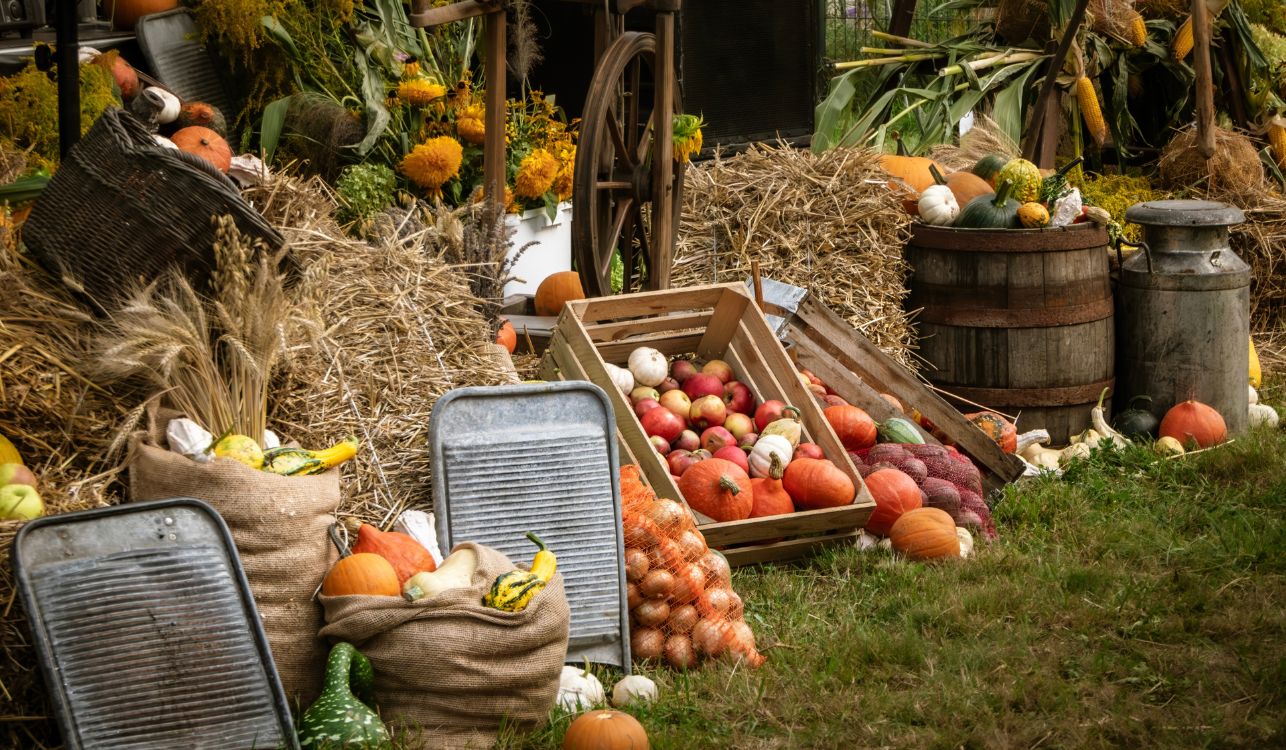
© Daniel Turbasa / Shutterstock.com
What is Harvest Festival?
The harvest season is personified by the famous hymn, We Plough the Fields and Scatter, written by German poet Matthias Claudius in 1782. Jane Montgomery Campbell, a London-born vicar’s daughter, translated the verse into English in 1861 and it became a popular hymn.
Versions of a Harvest Festival exist across many cultures and religions, all sharing the same core belief: a recognition that human life depends on the toil of farmers and the fertility of the land.
In Britain, farmers gave thanks during the full moon closest to the autumn equinox. In years gone by, it was usual for farmers and farm labourers to have a harvest supper, which involved feasting on seasonal produce, singing, dancing and playing games. If the yield was good, a surplus could be stored to feed people through the colder months ahead. A failed harvest, by contrast, could mean hunger in winter.
In Victorian times, the Harvest Festival was reinvented in churches as a kind of thanksgiving service, with prayers and songs to bring communities together. In many schools today, children bring food to donate, or participate in special assemblies. The festival is usually held on the Sunday nearest to the Harvest Moon.
What can home gardeners harvest in autumn?
Depending on the variety, you might still be harvesting root vegetables such as carrots, parsnips, or beetroot in October. Brassicas like kale and Brussels sprouts can be harvested, and there might be a late crop of tomatoes and strawberries still on the plants.
Your apple trees may still be yielding fruit in October, especially late varieties. Pick them when the flesh gives slightly and avoid twisting from the branches, cutting instead to prevent bruising. Blackcurrants, usually harvested in late summer, may be dormant by October, but if you have any late bloomers, ensure they’re kept cool yet ventilated when in storage to prevent mould.
Throughout harvest season, check frequently for pests or rot. Soft fruit like apples tend to bruise and attract fungal rot, so remove any damaged fruit promptly and store only the best ones.
Looking ahead: what to grow in autumn
The Harvest Festival is a moment when the cycle of growth pauses for reflection. We can appreciate how deeply food, land and community are intertwined. Once the festival spirit is behind us, gardeners and allotment holders can start planning what to grow in autumn to keep the land alive until spring arrives.
October and November are transition months in the UK. The days shorten, temperatures fall and frost becomes a real possibility. Surprisingly, many crops can thrive under these conditions, especially when given protection and timely care.
November is a great time for bare‑root planting of fruit trees and bushes. Apple, pear, cherry and plum trees can be planted now while dormant, as can blackcurrant, raspberry and gooseberry bushes. Planting when dormant reduces the shock and gives their root system a season to settle before growth resumes in spring.
Vegetables and legumes
Broad beans can be sown in autumn, or grown in pots over winter for later transplanting. Sowing them in the ground by November means they can begin growth earlier when spring returns.
Leafy salad greens such as mizuna, mustard greens and spinach can be planted before the colder months. You can sow indoors on a bright windowsill, or within a cold frame or greenhouse. It’s also a good time to fill seedbeds with quick maturing crops or green manure to keep the soil covered and avoid nutrient loss.
To grow crops successfully, the timing must be right - you should also adopt sound practices including soil preparation, fertilisation, pest control, pruning and plant support. Before planting fruit trees or bulbs in November, work in compost or well‑rotted manure to improve the soil structure, drainage and nutrients. A balanced, slow-release fertiliser or organic feed helps root growth. For leafy greens or winter salad, a light feed with nitrogen can help, but avoid overdoing it, as soft growth is vulnerable to frost.
Pest and disease control
Autumn brings slugs, snails and fungal spores. Use slug barriers or organic deterrents, remove dead foliage to reduce disease risks and ensure good spacing for airflow. For fruit trees, apply dormant‑season controls, such as cleaning up fallen leaves and pruning out diseased wood so pests and pathogens are less likely to persist through winter.
Consider placing frost cloth or horticultural fleece over tender greens if severe cold is forecast. Cold frames or cloches help extend growing windows for the leafy salad greens throughout November. By combining vigilance with pests, and timely care, gardeners can squeeze impressive yields even from the cooler months.
Autumn crop preservation and garden tool storage
Safe, effective storage of both your produce and gardening tools is crucial after the harvest. If seasonal fruits and vegetables aren’t stored in pristine conditions, there’s every chance they will rot!
Preserving produce using Solent Plastics’ Gastronorm food storage containers is excellent practice. Your fruit and veg must be kept fresh, uncontaminated and usable for as long as possible. This means using containers that are airtight or appropriately ventilated, food‑safe and resilient to cold and heat cycles.
Our heavy-duty polypropylene Gastronorm containers are an ideal choice for home use. With airtight lids, our stackable boxes are BPA‑free and certified for food contact under recognised standards. Safe to use in temperatures ranging from -40 °C to 100 °C, each box features a wipe-clean label for easy dating and tracking of contents.
For garden tool storage, Solent Plastics’ Gorilla storage boxes & heavy-duty plastic boxes offer robust solutions. Designed for demanding conditions, they are waterproof and stackable. Their capacities range from 54 litres up to 200-litre half-pallet options, making them ideal for both small toolkits and full garden shed overflow. The padlock loops allow secure locking if theft is a concern.
Harvest Festival is a living tradition, reminding us that food does not appear magically on supermarket shelves!