
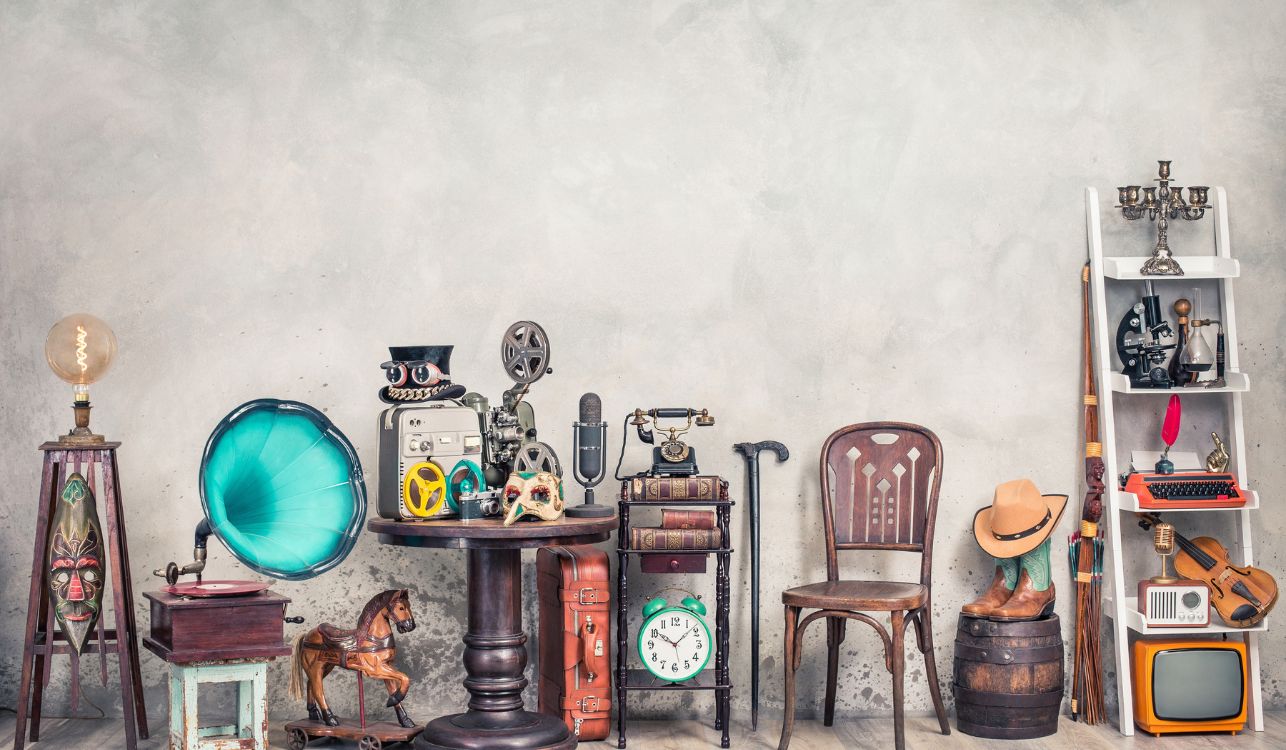
The importance of storing and preserving antiques and collectables can’t be emphasised enough in our high-tech modern world.
© BrAt82 / Shutterstock.com
They provide a connection with bygone times and enable today’s society to understand different eras, artistic movements, cultures and lifestyles.
Why are antiques so important?
Preserving artefacts from years gone by such as a vintage item of jewellery, furniture, coins or paintings means we’re also remembering the stories behind them. Future generations will be able to learn about the past and appreciate history, understanding how times have changed.
Every individual antique is valuable on some level, either in monetary terms or because it holds a personal place in the owner’s heart. A historic tapestry can tell the story of day-to-day life at the time, or depict a special event, while an ancient Chinese vase provides an insight into ceramic techniques and reveals our ancestors’ lifestyles.
Preserving such items keeps our cultural heritage alive, enabling people to learn about our shared history and celebrate our predecessors’ achievements.
In these times of increased recycling and sustainability, looking after antiques helps us to follow an eco-friendly ethos - an antidote to disposable consumer products.
Recycling, reusing and repurposing historic items reduces the demand for newly made items, preserving the planet’s resources.
Investing in antiques
The monetary value of antiques attracts collectors who view them as an investment opportunity. Selling antiques can be a lucrative source of income for dealers who know what they’re doing.
Certain sought-after and rare items can increase significantly in value over the years, especially if they have been well looked after. A piece of furniture made by a famous designer, or a painting by a famous artist, can be worth a fortune.
When collecting antiques from an investment point of view, it’s important to have a sound knowledge of their worth to make informed decisions. The value of rare antiques can be diminished significantly if they’re not stored properly. Neglect can ruin their condition and lead to a massive decrease in their financial worth.
What classes as an antique?
The traditional definition of an antique normally means it must be in its original condition and at least 100 years old. It should represent a period in history and is often, although not always, an item of decorative art.
In 1930, American politicians Willis Hawley and Reed Smoot defined antiques while drawing up legislation for new trading laws to help the US in terms of duty-free imports. The Smoot-Hawley Tariff Act included artistic works in marble, bronze, terracotta, porcelain and pottery, items of educational or ornamental value that had been produced before 1830 and other “artistic antiquities”.
Items that were of historic worth, despite being less than 100 years old, were defined as “vintage” or “collectible”, although there are some exceptions, such as motor vehicles, which can be called “antique” even if they’re only 25 years old.
Most expensive collectables
Some extremely rare antiques have been sold for staggering amounts over the years. The most eye-watering value was recorded in 2021, when a unique 1933 Saint-Gaudens Double Eagle was snapped up for a record £15.1 million at Sotheby’s auction.
The gold coin was produced by the US Mint between 1907 and 1933. Designed by eminent sculptor Augustus Saint-Gaudens, with a face value of $20, it features an eagle in flight on one side and Lady Liberty on the other.
The 1933 coin sold at Sotheby’s in 2021 is believed to be the only one still in existence. Previously, the same coin had sold at auction in 2002 for £5.9 million, so it had almost tripled in value in two decades.
The second-highest value antique was a Topps baseball sports card from 1952, featuring Mickey Mantle, which sold for £9.9 million in 2022. This set new sports memorabilia record when it was sold in mint condition at Sotheby’s.
In the 1950s, Topps cards were the most collectible. Those that survive 70 years later are hardly ever put on the market, as serious collectors tend to squirrel them away for bragging rights.
Born in 1931, Mantle played from 1951 to 1968 for the New York Yankees as a centre fielder and became a legend, winning the prestigious Triple Crown in 1956.
The 1952 card is simply the rarest of all sports cards. Produced in very limited quantities, it contained a printing error, so many were thrown away. However, this is what makes it so rare today and for collectors, finding a Mantle card in well-preserved condition is a lifelong ambition.
The third most expensive antique ever sold was the first US silver dollar, dating from 1794, which sold for £9.6 million in 2022. Known as the Flowing Hair silver dollar, its immense historical significance is the main reason for its massive value.
It was acquired by rare coin specialist and auction house Great Collections for a client.
How to store antiques
Knowing how to store antiques is extremely important to prevent their condition from deteriorating over time.
Practice climate control by maintaining a stable temperature-controlled environment, keeping humidity levels low, as fluctuations can be damaging for historic artefacts.
Always handle antiques carefully and wear gloves to avoid potential harm from oils on your hands. If you clean your items, use gentle methods and never let them come into contact with harsh chemicals, as this can cause irreparable damage.
Store antiques away from extreme temperatures, direct sunlight and excessive moisture. If you have items that need restoring, always have this done by a qualified professional.
Solent Plastics’ storage solutions
Solent Plastics offers various storage solutions that are useful for preserving antiques and collectables.
Ideal for holding smaller items such as old picture postcards, sports cards, books and other delicate antiques; our three-litre Really Useful clear plastic storage box is made from recyclable polypropylene, enabling you to view the contents with ease. With a reinforced flat bottom and locking handle clips to hold the lid in place, it can be used at temperatures ranging from -15°C to 80°C.
The 0.3-litre Really Useful plastic storage box is ergonomically designed and stackable, like its larger counterpart. Use it for jewellery, marbles, pens, stamps and coin collection storage.
For larger items, our 65-litre super-strong recycled attached lid container combines an improved design with low prices.
Compatible with other like-for-like containers, it can be stacked and integrated with existing boxes as your collection grows. Its tessellated lid means it will nest in less space, and there’s a label area on each end so you can keep track of the contents.
Made from heavy-duty recycled polypropylene, it’s ideal for preserving antique items such as ornaments, crockery, small paintings, vinyl records, vintage video game consoles and games, board games and more.
Whether you’re keeping them for sentimental reasons, or because they’re valuable, always make sure you store your antiques and collectibles in the appropriate storage containers.