
Appropriate wetsuit care will not only ensure it continues to provide optimum protection, but will also extend its lifespan, saving you money over the long term.
Most wetsuits are typically made from neoprene, a synthetic rubber that’s sensitive to heat and harsh chemicals, so they require gentle cleaning and storage methods.
How often should you wash a wetsuit?
Rinsing your wetsuit is recommended after every use, with a more thorough wash after every few uses. Neglecting this can lead to odour, bacterial buildup and, eventually, material breakdown.
Taking off your wetsuit is an art in itself, as you should never remove it while standing on gravel or other rough surfaces, due to the risk of catching and ripping the material. Many surfers recommend using a purpose-made changing mat, or standing on a towel while you take it off.
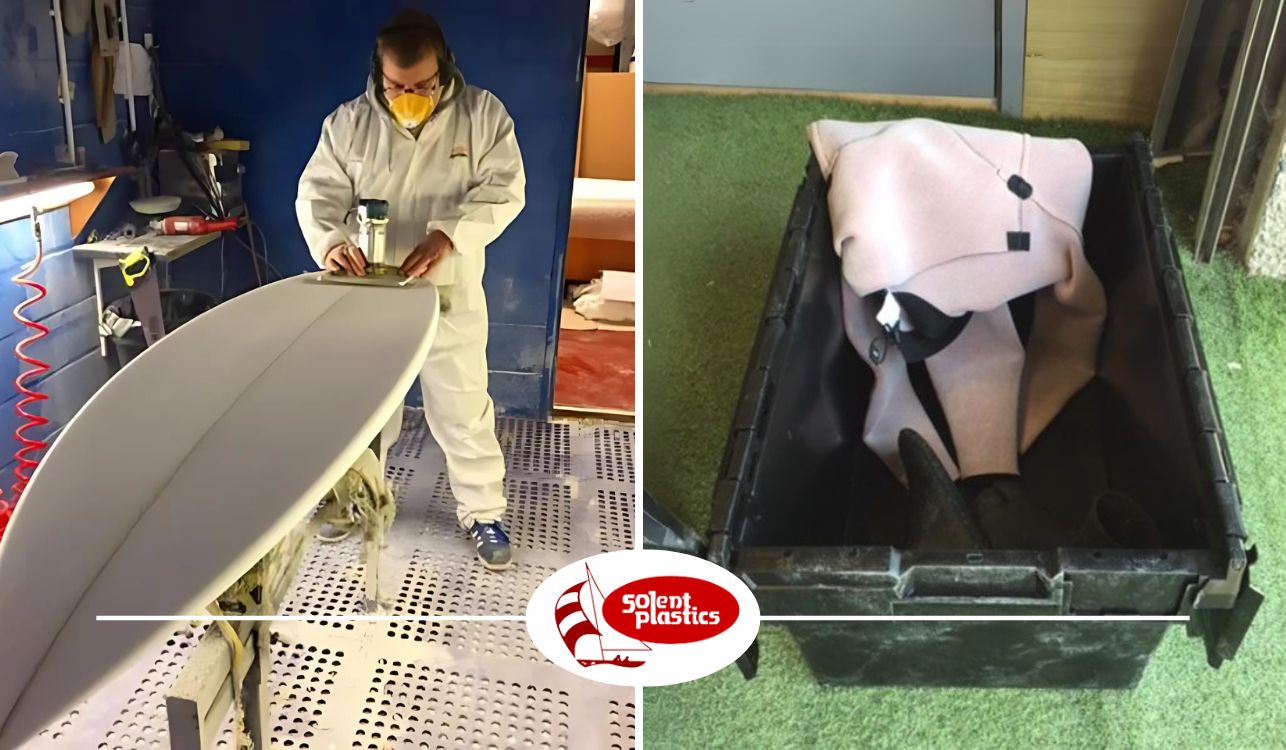
Rinse your wetsuit in clean cold or lukewarm water as soon as you can. The easiest and best way is to dunk it in a large bucket or container of water after each surf. There are some useful options on the market, such as Solent Plastics’ recycled black storage boxes with lids, which can double as a mobile wash bowl, so you can remove salt and sand from the wetsuit as soon as you leave the water.
Reviewed by renowned surfer Nigel Semmens, who stated: “The lid is very good and the box keeps all the water contained.”, our 80-litre heavy duty XL attached lid container is an ideal size. A champion surfer from Cornwall, Nigel won the UK Surf Championship in 1979. Since the end of his competitive career, he has become a highly respected surfboard shaper.
Rinse your wetsuit on both sides until all the salt and dirt have gone, making sure not to leave any traces of debris. Don’t handle it too roughly, as the more carefully you treat your wetsuit, the longer it will last. It should never be washed in a washing machine, as this will damage the neoprene and the glued seams, leading to holes.
Can I use soap?
It’s not advisable to use any chemicals, detergents or cleaning products due to the risks of damage. A small amount of natural soap can be used sparingly to keep it smelling sweet, or preferably use a specific wetsuit cleaner or shampoo, as these are designed to extend the suit’s lifespan. The general rule of thumb is to wash it in plain water after every session, and with a cleaning product around every five sessions.
Drying a wetsuit
Drip-dry it; use a thick, sturdy coat hanger made for trousers and fold the wetsuit in half at the waistline, right side out. Don’t hang it in direct sunlight, as over time, this can cause UV and ozone damage.
Similarly, never put it in a tumble dryer, as this can cause irreparable damage to the neoprene. You’re best to hang it outdoors out of direct sunlight on a mild day, or over your bath or shower, or another well-ventilated area of your home. The important thing to remember is ALWAYS avoid direct heat sources, either for washing or drying your wetsuit.
How to store a wetsuit
Don’t leave it in the boot of your car for long periods of time, as it needs to be kept in a clean, dry area, preferably in your wardrobe. Make sure your wetsuit is 100% clean and dry before putting it into storage if it’s not going to be used for some time. Large plastic storage boxes are suitable, as long as you’re not folding the wetsuit too tightly to squeeze it into a small space, as this will cause damage.
The consequences of improper storage can include causing the neoprene to crack and lose flexibility. If you’ve folded it too tightly, permanent creases can impact the fit and insulation properties. Wetsuits will deteriorate over time, as the neoprene material comprises tiny cells that are filled with air. As the suit ages, these cells may gradually collapse, causing it to become less flexible, so the better you care for it, the longer it will last in a good condition.