
Egyptian and Roman civilisations would handcraft decorations including deity symbols, suns and greenery, as part of deeply-rooted traditions to celebrate changes in seasons. Some of the decorations recognised the promise of new life, such as the annual Egyptian Sokar Festival, which was marked by a ritual of ploughing the soil to ensure good crops.
© Public Domain
The Romans had their own festival on 25th December, Dies Natalis Solis Invicti (Birthday of the Unconquered Sun) and the Brumalia winter solstice celebrations. These are just two examples of people’s traditions of decorating their homes to mark special occasions, but we have to go to Europe to understand the birth of the first Christmas decorations.
History of Christmas ornaments
The tradition of Christmas ornaments began in Germany, when householders celebrated the birth of Christ by decorating the evergreen branches of fir trees with natural items such as nuts, apples and other fruits. While this is the first recorded occasion of Christmas ornaments, historians estimate it probably goes back further.
The decorations were believed to serve as a reminder that despite the long, dark winter, spring and warmer weather were just around the corner. Other tree decorations included candles and various berries. Householders began bringing in fir trees at Christmas soon afterwards, so they could enjoy the display inside their home, rather than the garden.
This tradition continued in Germany over the next 300 years, until German professional glass blower Hans Greiner invented the first decorative glass beads to hang on Christmas trees in the 1800s. His glass apples, “baubles”, adorned his own tree. Family and friends who saw them put orders in for their own and the trend spread throughout the local community.
Other designers began creating their own tree ornaments based on his design, but in different shapes, while also adding a silver trim, painting them and attaching a hook, making it easier to hang them on the branches. Recognising a niche in the market, businesses soon set up works to manufacture their own tree ornaments.
Spread of Christmas baubles
German immigrants settling in America took the tradition with them and glass tree ornaments took off in a big way there in the 1840s.
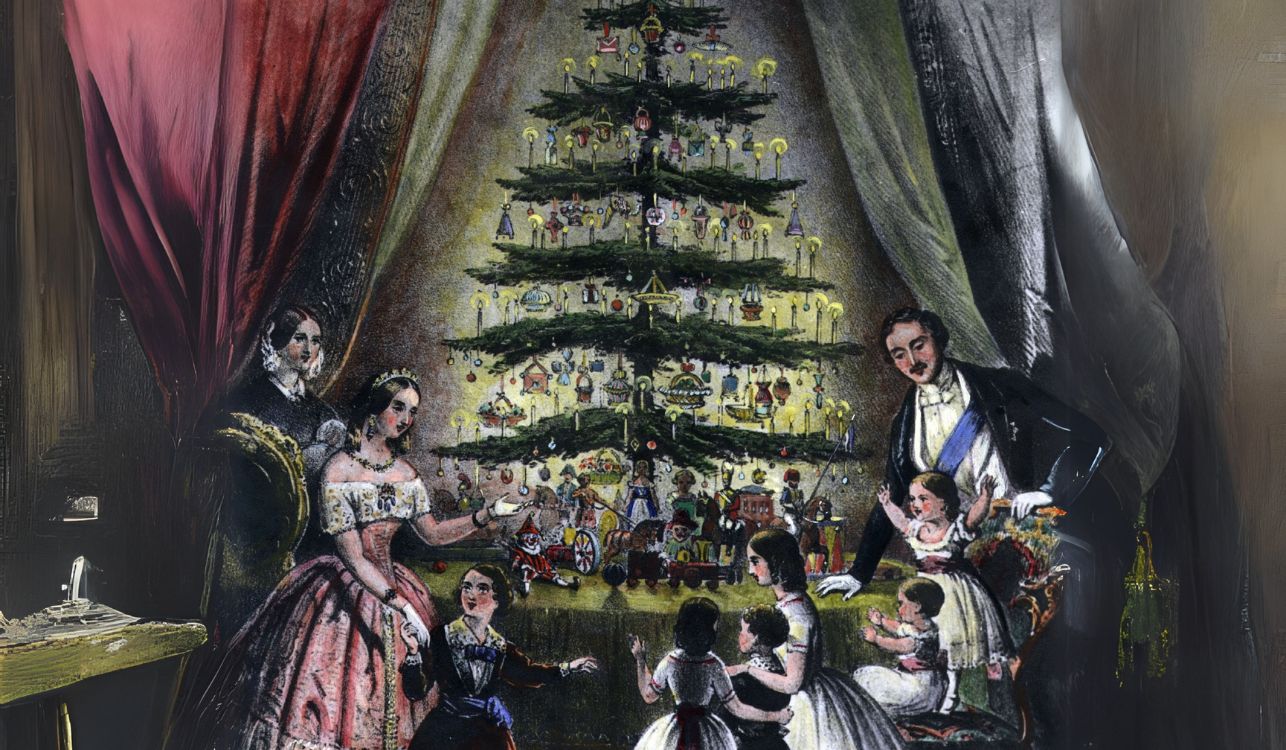
Meanwhile, in the UK, Queen Victoria and her family began celebrating Christmas with a large decorated fir tree and made this public knowledge at around the same time. This largely came about because her husband Prince Albert was a member of the German royal family. The public began adopting the tradition, following the Queen’s lead. Once it gained a foothold, decorating Christmas trees became popular and it has remained so ever since.
By the late 19th century, businesses realised the massive monetary value of producing Christmas ornaments and bright and colourful decorations became a traditional part of the festive celebrations. Once they had spread across Europe and the United States, baubles were soon seen in other countries where Christmas was celebrated.
The original, simple, natural ornaments have evolved over time to the bright baubles, glitter and tinsel that we know and love today. Production has continued non-stop in the UK, except for during World War II from 1939 to 1945, as glass ornament manufacturing was stopped due to labour and materials shortages.
How has ornament design changed?
From the early ornaments made from natural materials, designs began to change significantly in the latter half of the 20th century. New materials were used, which made it easier to craft different shapes and sizes and keep the prices down.
Make your own DIY Christmas baubles
Making your own Christmas baubles can be a fun, money-saving activity to enjoy with the kids. You can make upcycled baubles out of shredded paper, creating simple ornaments which take around 15 minutes each to make.
You’ll need some clear plastic empty bauble shapes, which you can buy from craft shops, or online sites such as Amazon; old Christmas cards, festive magazines or wrapping paper with colourful pictures; a pair of scissors; and ribbons or embroidery thread to hang them on the tree.
Cut the paper into multiple long, thin strips and choose the ones you like best. Roll the strips, keeping them smooth and not screwing them up, into ball shapes and insert them in the clear plastic bauble, which should open in the middle.
Insert some glitter, tinsel or any other adornments, including a small picture of the child who made the bauble, which should be slid into the side of the clear case, facing outwards. Click the bauble together and add ribbon or colourful thread to hang it from the tree.
This activity can take anything from 15 minutes to several hours, depending on how many you make and how artistic you want to be.
Containers such as portable tool boxes & storage carry cases and Really Useful plastic storage boxes are great for keeping smaller crafting items and tools ready for your next round of activities. After Christmas is over, you can also use them to store the baubles safely until next year.
Christmas decoration boxes storage
With Christmas decorations being quite delicate, shaped irregularly, or made of fragile materials such as glass, they are at risk of being broken. Storing them correctly for the other eleven months of the year helps to combat the challenges of looking after these delicate family mementoes. It’s important to choose a storage box with lid to ensure they remain in pristine condition.
Clear plastic storage boxes can be a massive bonus when you’re looking for the decorations before Christmas and putting up the tree, as well as the million other tasks you must complete before the festivities begin.