
Waste during the holiday period increases by around 30% compared with the rest of the year. Wrapping paper, plastic decorations and broken tree lights contribute to the 125,000 tonnes of Christmas plastic waste in the UK alone. Environmental organisations such as the National Trust and the World Wildlife Fund are urging consumers to “think green” and extend their seasonal goodwill to the planet as well as their loved ones.
 19
19© Yulia Furman / Shutterstock.com
How much waste is produced at Christmas?
In the UK, we buy around eight million Christmas trees every year, but by January, the combined weight of dumped trees is 160,000 tonnes.
In the new year, Brits throw away one billion Christmas cards; 289,000 tonnes of cardboard packaging; wrapping paper that would stretch for 227,000 miles if laid end-to-end; 32 million advent calendars; 13,350 tonnes of glass, mainly from drinks bottles; and 4,200 tonnes of cooking foil. Everyone enjoys sitting down to Christmas dinner, but 66% of households buy too much food and as a nation, we throw away the equivalent of 54 million platefuls of food.
Why you should store festive items
Many types of Christmas decorations are not generally recycled, so it pays to store them properly - both financially and in terms of cutting down on waste. Reuse them year after year!
Tinsel isn’t recyclable, so if it hasn’t been packed and stored properly on Twelfth Night, it can end up tangled and unusable by the following Christmas. Made from PVC, it can take more than 450 years to decompose. If discarded, it ends up at landfill, as it can wrap around conveyor belts and machinery at the recycling plant.
Glass baubles are often thrown away, as they aren’t recyclable. The same goes for plastic baubles: an estimated 12,500 tonnes of Christmas decorations such as baubles and tinsel are thrown away each year, when they could have been packed away securely and reused.
You would think Christmas wreaths with mistletoe, ivy, fir cones and holly could be composted, but unfortunately, if they’ve been spray-painted, covered in glitter or stuck together with glue, this isn’t possible. Wreaths with plastic decorations such as artificial flowers or ribbons also end up at landfill.
How to have an eco-friendly Christmas
Have an eco-friendly Christmas by throwing away as little as possible after the festive period. This should be everyone’s aim, to avoid inundating landfill sites with waste that can’t be recycled.
Put decorations away carefully so they won’t be damaged, and you can then take them out in pristine condition the following year. Using storage boxes with lids will protect fragile items such as baubles. Wrap breakables in bubble wrap or tissue paper before packing them in padded layers.
Wrap fairy lights, bunting and tinsel around a stiff card to prevent them from getting tangled before placing them in a box. If you have bulky or awkward-shaped items such as candle-holders, reindeer ornaments, wreaths and wall plaques, put them in larger boxes that can be stacked to save space.
Coloured storage boxes can help keep things organised: store different types of items in each colour-coded box to make it easier to unpack them again next year.
Eco-friendly decorations
It’s easy to make your own eco-friendly Christmas decorations. Not only is this a cheaper way of decorating your home, but it will also be a great way to spend some fun time with the kids.
Make paper chains with used wrapping paper, doilies, or last year’s Christmas cards, or pick up pine cones from your local woodland and tie them together with ribbon, instead of buying the glitter-filled decorations sold in shops.
Glitter is harmful for the environment because it's a microplastic that can contaminate water, soil, air and food. Made from PET or PVC covered with synthetic materials such as aluminium to make it shiny, glitter can seep into our oceans and join the growing volume of plastic waste.
Sustainable wrapping paper and ornaments
Rather than spending a fortune on wrapping paper that’s going to be in the bin by Christmas night, try alternatives such as colourful fabric wraps that can be used time after time. Craft paper, crepe paper, or the pages of magazines with bright pictures can be used to wrap gifts - this type of paper can be recycled, unlike foil wrap or paper with glitter, which will end up at landfill.
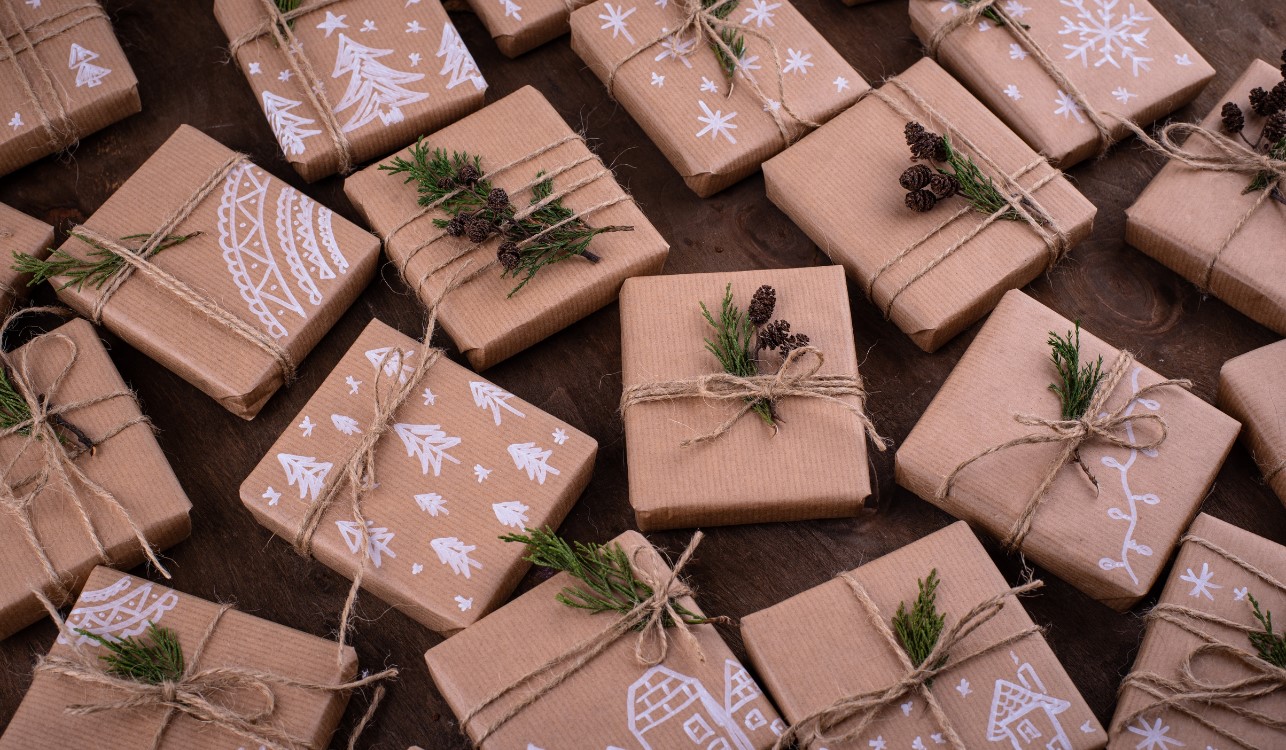
Even plain brown paper can look stylish if you decorate it with colourful ribbons, or ask the kids to draw personalised pictures on it, depending on the recipient. Use biodegradable tape, rather than plastic-based sticky tape.
Make your own cardboard gift boxes, decorated with pine cones, berries, evergreen sprigs or dried floral trinkets, or wrap presents using your children’s artwork.
You can also use wooden ornaments and Christmas tree baubles, which come in a wide range of styles, shapes and sizes.
Storing Christmas trees
If you have a real Christmas tree, buy one that can be planted for the rest of the year, rather than one that has been chopped down at the trunk, as this will certainly die - possibly even during the holiday, depending on how hot it is in your home.
A real tree re-planted in the garden will last for years and is more environmentally friendly than an artificial tree can ever be. Around 80% of all real trees are Nordmann firs, which have taken ten to 12 years to grow to a height of six feet, so simply chopping them down means the end of their life. Green campaigners say the amount of real trees simply left to rot after Christmas produces a massive 100,000 tonnes of methane, which is 25 times more damaging than carbon dioxide as a greenhouse gas.
Investing in quality storage reduces the need to replace decorations and supplies annually, saving money and time and recalling some happy memories as you take your precious Christmas items out each year.