
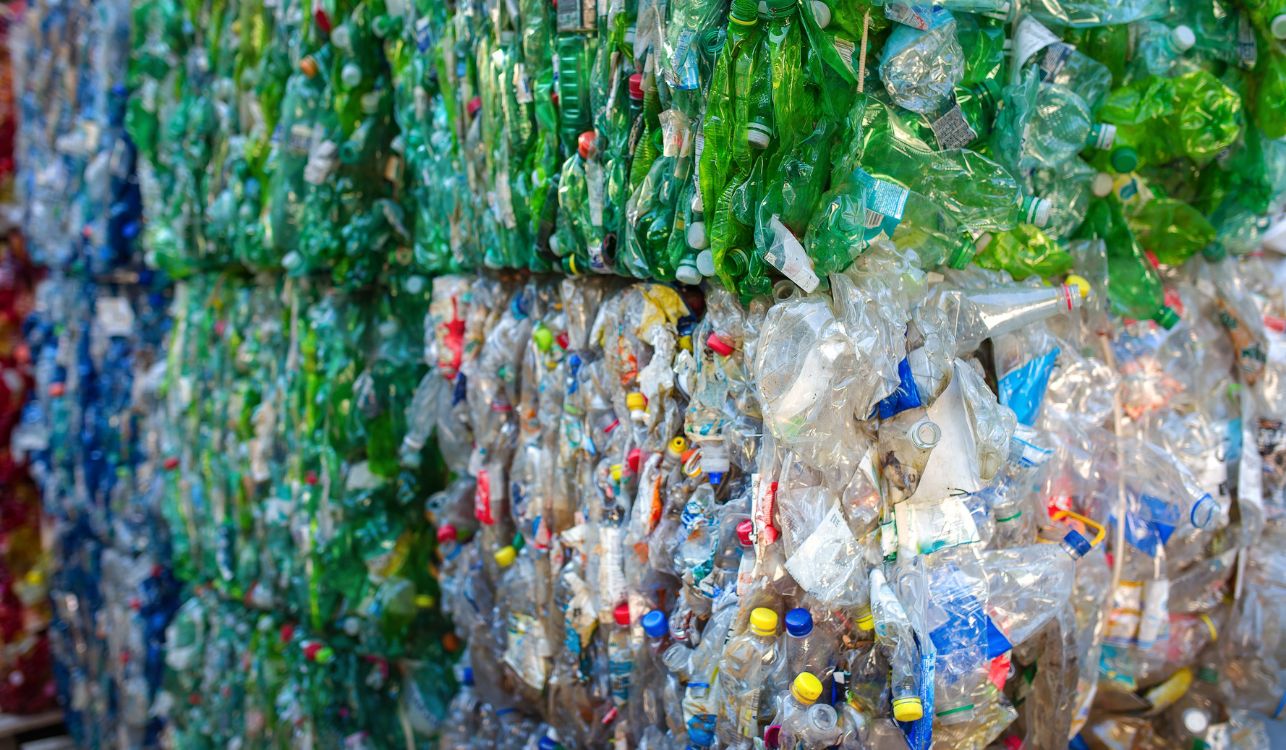
© JDzacovsky / Shutterstock.com
Why is plastic recycling important?
For every tonne of plastic recycled, 6.7 cubic metres of landfill space is saved. Recycling uses less energy than manufacturing plastics from raw materials, reducing their carbon footprint and combating climate change.
It saves money, both in terms of buying materials and on waste disposal costs, also improving a brand’s image, as consumers are increasingly turning to eco-friendly companies.
A study by Simon-Kucher and Partners revealed 85% of people had bought more sustainably produced products over the past five years. In general terms, recycling creates a culture of responsible consumer behaviour, reduces waste and extends the life of landfill sites.
With an estimated 358 trillion microplastic particles already in the world’s oceans, recycling is crucial.
What types of plastic can be recycled?
It’s important to understand what is recyclable and what isn’t in order to lead a sustainable lifestyle. Commonly recycled plastics include polyethylene terephthalate or PET, used to make bottles; high-density polyethylene or HDPE, used for containers; and polypropylene or PP, a lightweight and versatile thermoplastic with many uses, including packaging.
Not all plastics are recyclable due to contamination by labels and other materials, consequently damaging the recycling equipment, lowering the recycled products’ quality and complicating the sorting process.
Composite materials, such as plastic reinforced with carbon fibres, are difficult to recycle due to having to separate the different components. Varying properties such as the plastics’ colour, melting point and structure mean they can't be processed together. Thin films or bags can clog recycling machines.
The plastic recycling process begins with collecting and sorting the waste and ends with it being made into useful new products.
How is plastic waste collected for recycling?
Across the UK householders, businesses and schools sort out their plastic and other recyclable waste ready for kerbside collection organised by the local council, or through a waste management contractor. Some take waste to their neighbourhood recycling plant, where they must deposit it into the relevant skip.
Waste transfer stations often wait until they have a bulk amount before the waste goes onto the next stage of its journey, when it’s taken to material recovery facilities ready to be sorted into different types.
How is plastic sorted for recycling?
Sorting plastic from other materials is carried out at the material recovery depot. Plastic waste is then taken to a recovery facility to sort it into different types by mechanically placing it onto conveyor belts.
A constant flow of waste passes through the sorting area, where there are several sorting techniques, including manual picking, when employees stand at the conveyor belts and separate the materials by hand.
The items either go for disposal in the case of non-recyclables, or for further processing. Once the non-recyclable items have been removed, the waste is then fed into large cylindrical rotating drums, known as trommels, which contain holes that permit finer debris to fall through.
A ballistic separator can be used, consisting of two oscillating paddles that remove rigid waste, such as bottles and containers, to one end and flexible waste, including plastic wrapping, to the other.
An optic sorting machine can be used to separate different types of plastic by using NIR (near infrared) sensors to measure the various kinds through their absorption of light. This process uses jets of air to separate the different types of plastic to the relevant places.
A sink-float separator is also a well-used method, involving filling a tank with water. Low-density plastics float and high-density plastics sink. They are then recovered for the next stage of their journey.
Why is the plastic sorting process crucial?
Ensuring different types of plastics aren’t mixed together improves the quality of the recycled products, reducing impurities that may otherwise enter into the mix. It avoids the risks of contamination of the end products and increases efficiency at recycling plants.
Once the sorting process has been completed, the recycled plastics are sent for reprocessing.
What cleaning processes are used?
Washing the plastic ensures contaminants such as food waste, adhesives and labels are removed. Householders’ actions have a big impact on the cleaning stage, as simply rinsing the plastic containers to remove food and other materials as soon as they’ve been used helps the recycling system to operate faster and more efficiently.
The plastics are subject to various washing methods, depending on the level of contamination. Friction washers are the most common cleaning equipment, as they are cost-effective and work well by using kinetic energy, heat and pressure.
Rotary washers are good for removing food debris and oils by using a heated caustic solution. They can be used as a pre-wash before friction washing for plastics with higher levels of contamination.
The cleaning process comes with its own environmental challenges in terms of water usage, so facilities recycle or minimise water waste to ensure the system is as environmentally-friendly as possible.
How recycled plastic is made
The next phase of recycling involves shredding the plastics into small pellets or flakes to ready them for further processing, as smaller pieces are easier to melt and mould.
Shredding machines are used to grind the plastic down. There are various classifications of machinery, including hammer mills, which pulverise the plastics with swivelling hammers in a rotary drum. Other methods include guillotines or rotary cutters to cut the plastic into the required sizes.
The shredded pieces are melted in readiness for making new products, completing the final stage of the process. An extruder machine moulds the melted plastics into pellets and forces them out. These pellets are then sold to manufacturers to make new goods.
Recycled plastic products
Many different items can be made including bottles, textiles and construction materials.
All Coca-Cola bottles during the football World Cup 2022 were made from recycled plastic. There’s also a growing trend of well-known football clubs, such as Liverpool, Manchester City, Manchester United and Real Madrid, producing kits made from recycled plastic fabrics.
In construction, recycled plastic makes “green” concrete, bricks, fences, road barriers, drainage systems, flooring, roof coverings and landscaping materials. Corrosion and decay-resistant, it’s ideal for applications affected by the weather.
Future of plastic recycling
Recycled plastic is being used by a charity in Indonesia to provide prosthetic legs for patients. A ground-breaking innovation, this offers a solution for amputees with limited money, as well as promoting sustainability. Experts at Leicester’s De Montfort University created a prosthetic leg from recycled plastic for £10, compared with traditional methods costing £5,000.
Emerging technologies such as AI-driven sorting, plastic-eating enzymes and circular economy models are all reshaping the industry.