
More businesses and individuals are interested in the future of space travel, with the commercial industry being valued at a massive £2.05 trillion globally.
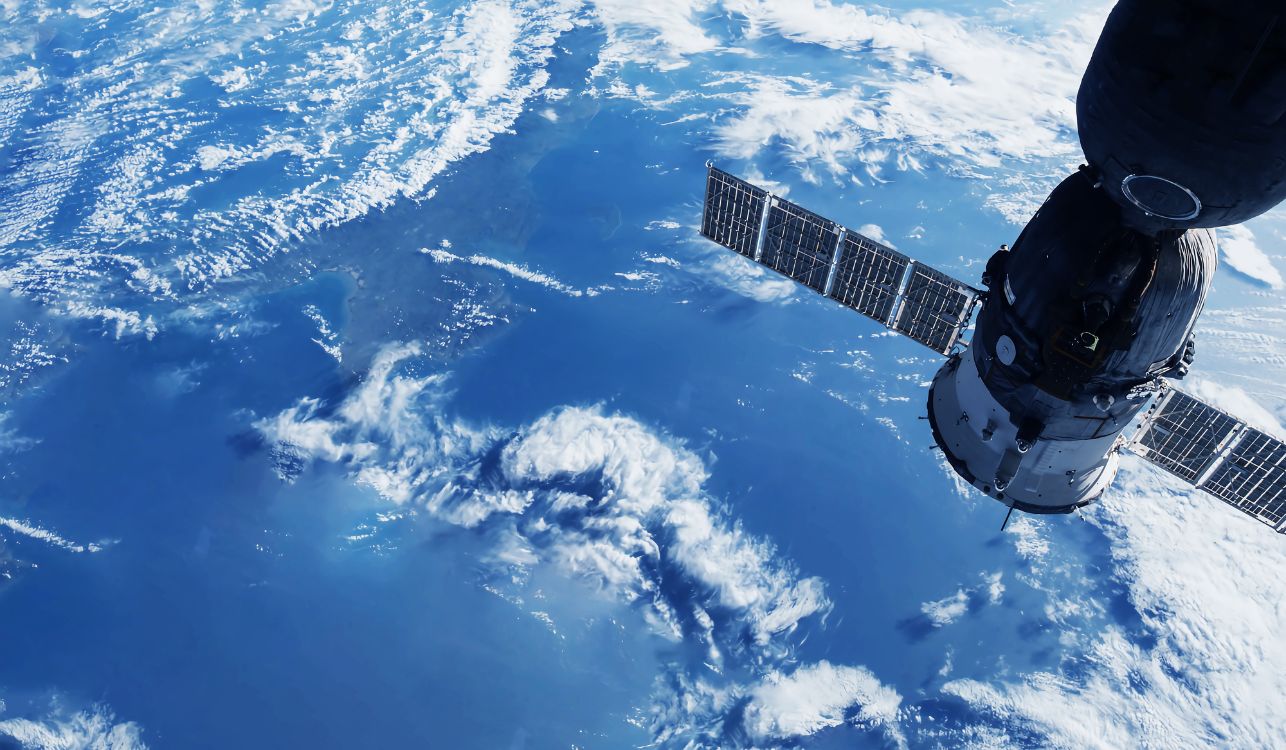
© Artsiom P / Shutterstock.com
Orbital space tourism began around two decades ago, with Texas-based spacecraft manufacturer SpaceX and Space Adventures of Virginia being the first to coordinate flights for members of the public into the earth’s orbit.
When was the first commercial flight into space?
Space Adventures worked with Russian counterparts to provide the first commercial flight into space in 2001. American engineer and entrepreneur Dennis Tito was the first tourist in orbit when he travelled to the International Space Station on a Soyuz TM-32 spaceship.
The billionaire trained at the Yuri Gagarin Cosmonaut Training Centre in Russia before his adventure, after the Russian Federal Space Agency accepted that he was a suitable candidate for the £15 million commercial space flight.
The first commercial flight organised by SpaceX took place in 2020, when astronauts Bob Behnken and Doug Hurley took off from Florida's Kennedy Space Centre on the Crew Dragon Demo-2 mission to the International Space Station.
Virgin Galactic, the American-British space flight company founded by Richard Branson and the Virgin organisation in 2004, launched its first space tourism commercial flight in June 2023. It has also created the first purpose-built commercial spaceport in the world, Spaceport America, where the company’s operational and training facilities are based.
Challenges of space exploration
The key challenges that materials must overcome in space exploration relate to weight, temperature extremes and radiation exposure. They need to be lightweight to conserve fuel and reduce costs, but at the same time, durable and able to withstand extreme conditions, such as low and high temperatures, vibrations and pressure during the launch and when landing.
The materials used must be lightweight enough to launch the crafts into space by reducing their mass. In the case of the James Webb Space Telescope, the biggest, most complex and most powerful telescope ever launched in space; materials must be able to withstand a temperature of -251°C.
Vacuum conditions can degrade critical components faster, as this increases the materials’ outgas rate. Spacecraft must also withstand the impact of space debris and micrometeoroids at high velocity.
They are subject to atomic oxygen and ultraviolet radiation that can cause quicker erosion. Durable plastic polymers, the key spacecraft materials, have become vital to the upgrades required to make the industry both environmentally friendly and more economical.
Plastics are used for both spacecraft and suits, boosting the safety and affordability as space travel for members of the public becomes a reality.
Why is plastic important to space travel?
The role of plastics has evolved in the field of space exploration over the decades and defines a new generation of travel.
Durable plastics, including polycarbonate, are used for astronauts’ helmets and visors, while scratch-resistant and durable plastics make portals and windows. A variety of spacecraft components are made from thermoplastics and thermoplastic composites such as electrical insulators, optical lens centring rings and bearings.
Protecting the cables from vibration and abrasion during the flight, plastic also provides cable and wire protection in the form of spiral wrap insulation, heat shrink tubing and convoluted tubing. The spacecrafts’ surfaces are protected by TOR polymers to combat the erosion caused by atomic oxygen and radiation.
The versatility of plastics has become crucial for space applications, as they can be modified in various ways to achieve a wide range of properties. Their light weight contributes to reducing the weight of spacecraft by replacing other materials where possible, such as metal.
Aerospace plastic is up to six times lighter than steel and 50% lighter than aluminium, which can improve the crafts’ efficiency and performance. Its main advantage over metal is its ability to provide the same strength, while being considerably lighter.
In addition, plastics have better corrosion resistance, so it can survive the harsh environment of space, and so increasing the crafts’ longevity. This is a positive in terms of the industry’s sustainability and environmental goals.
The greater flexibility of plastic means it can be moulded into more complex and bespoke designs, particularly those requiring tight tolerances. A massive plus, plastic parts are cheaper to make!
Plastic clothing for space travel
Plastic has revolutionised spacesuits, giving more people the chance to experience space travel safely. NASA unveiled a new prototype for its spacesuits in 2024 in preparation for its Artemis Mission to the moon in 2025.
The garments rely on heavy-duty synthetic flexible fibres, including Kevlar, made from poly-para-phenylene terephthalamide. This revolutionary material will protect the wearers from dangerous cosmic rays carrying high radiation levels that can potentially cause cancer.
New gloves are also being designed from Kevlar, a manufactured plastic created by combining a chemical solution of nitrogen and hydrogen with an acid. The gloves offer protection while boosting dexterity and mobility for people visiting space.
Role of plastics in missions to Mars
Plastics have already played a key role in space travel to Mars and are expected to play an even greater part in longer duration space travel to the Red Planet in future.
Teflon fluoropolymer resins have been widely used in the Mars Exploration Rovers, enabling the craft to withstand the temperature extremes and sandstorms of the planet.
Reinforced polyethylene is ten times stronger than aluminium, yet lighter, with the potential to cut the costs of space flights by reducing the production costs and weight of the crafts.
In addition, plastics offer a more effective shield against cosmic radiation than aluminium, which is an important consideration for commercial flights of the future.
Durable garments made from polycarbonate plastic, or the latest Kevlar plastic could be worn along with helmet lenses and visors made from high-optical quality plastic.
Research is continuing into the different uses for plastic in space, such as building greenhouses on Mars that would mimic the performance of those on earth. Lunar greenhouses are an extension of a project whereby astronauts have grown vegetables and plants successfully onboard the International Space Station.
Scientists at NASA at the Kennedy Space Centre are collaborating with a team from the University of Arizona to develop long-term means of sustaining people working in deep space. The Prototype Lunar Mars Greenhouse Project is aiming to create a way of growing vegetables for food and other plants to sustain life support systems by producing oxygen and reducing carbon dioxide for pioneers living on Mars.
Recycling in space is also being developed, with the aim of repurposing waste into raw manufacturing materials. Similar to a 3D printer, a device called a Refabricator has been pioneered by Tethers Unlimited Inc as part of NASA’s in-space manufacturing plans to recycle and reuse plastic bags.