
Plastic is vital in everyday life and is used in many important industries. However, it has become a problem in recent years due to people not disposing of it responsibly.
© Bigc Studio / Shutterstock.com
The associated pollution is causing serious damage to the environment, wildlife, oceans and marine life, with plastic packaging and bottles being among the main culprits. Everyday items such as dental floss, food packaging, shampoo and shower gel, baby wipes, synthetic fabrics, wrapping paper and disposable coffee cups are adding to the problem.
Now scientists are developing sustainable materials that can be used as substitutes for plastic to help create an environmentally friendly future.
Platinum silicone
Silicone products that don’t have plastic fillers are the way forward. Platinum silicone is made primarily of sand, making it durable, flexible and heat-tolerant, so it can be used safely for applications in high temperatures.
When it comes to being eco-friendly, platinum silicone is non-toxic for the planet, people, animals and the ocean. Made from the silica present in sand, this makes it a longer-lasting material that doesn't over-use the earth's resources. This is better for the environment on both counts.
Householders can significantly reduce their plastic dependence, as items made from platinum silicone are reusable and will last for many years.
Beeswax coated cloth
Replace plastic wrap and plastic bags with beeswax coated cloth, which is easy to clean and simple to use. It also smells pleasant!
A highly breathable material, it will keep your food fresh for a relatively long time, reducing waste. It can be shaped and moulded around the individual food product in the same way as cellophane, making it simple and convenient to use.
Natural fibre cloth
Plastic bags can be replaced with natural fibre cloth, which is a versatile material that can also be used for clothing, rather than synthetic materials that shed plastic fibres.
Wool, organic cotton, hemp and bamboo are all natural materials that can also be safely used to make children’s soft toys.
The main benefit of natural fibre cloth is the fact it doesn't release minute plastic particles while clothes are being washed in a washing machine.
Wood
Wood from sustainably managed forests can reduce the manufacture of plastic kitchen utensils, cleaning brushes, cutting boards and more, as long as it comes from a renewable source.
Making any items from wood prevents more small plastic household items from being mass produced, cutting down on plastic waste when they have served their purpose. Wood will decompose naturally and as long as the forests are managed sustainably, it will not cause damaging deforestation.
The use of wooden utensils in restaurants and cafes is a more sustainable way of operating, as they use less resources and produce fewer byproducts than plastic.
Bamboo
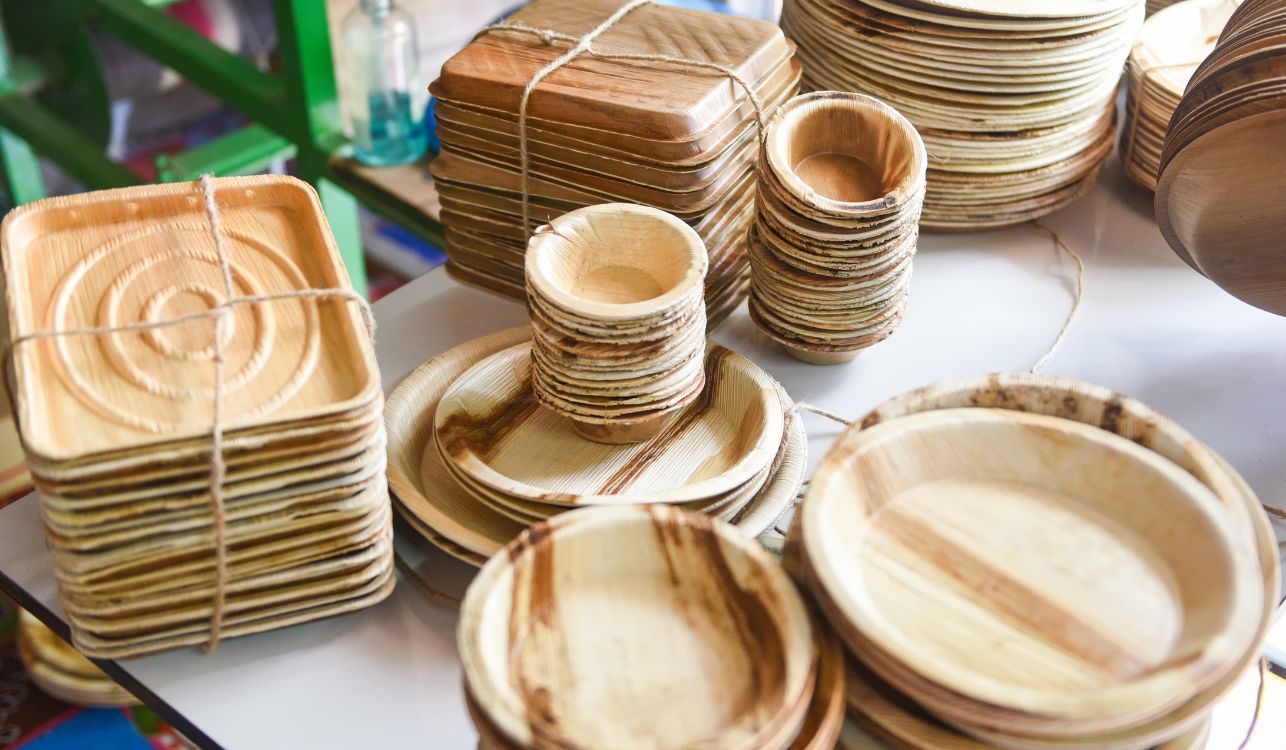
Plastic items such as drinking straws and tableware are being replaced by products made from bamboo. Durable, lightweight and compostable, it offers a sustainable alternative to many throwaway plastic items.
In the same way wood reduces byproducts and can be disposed of safely, bamboo has similar properties. Bamboo utensils don't release any toxic substances, as they are chemical-free and easily recyclable.
Paper and cardboard
Paper used to be a popular packaging in years gone by, before the advent of single-use plastic packaging.
It can be recycled, although not indefinitely, but it’s certainly more sustainable than clingfilm, plastic sandwich wrappers and fast-food boxes. Most paper is suitable for home composting too.
Cardboard is also compostable, and a lot of companies are using it for packaging to be more sustainable and reduce waste.
Bioplastics
Bioplastics are a new breed of plastics that can be compostable or biodegradable. They are being produced to replace harmful plastics around our homes, however, they still require further development, as most bioplastics aren’t suitable for home composting and can’t be left to break down naturally in the environment - they often need commercial composting facilities that aren't available to the public in every region.
Scientists have created partially bio-based plastics that are not readily compostable but can be broken down by microorganisms using a process that takes a minimum of three to six months. Manufactured from materials such as sugar, cornstarch and agricultural byproducts, they require commercial facilities to aid their decomposition.
The newer products that can break down through home composting are still a rarity.
Natural alternative packaging
Some companies are working on producing fully compostable packaging materials – in some cases, these are edible.
Mushroom packaging made from mushroom root known as mycelium, combined with agricultural waste, is “grown” and dried. It can be used as an alternative to Styrofoam packaging.
In Thailand, where plastic problems have reached crisis level, supermarkets are trialling a plastic-free packaging solution made from banana leaves and bamboo. As bananas are in plentiful supply, this is an example of using local sustainable materials sensibly.
This practice could be adopted in other countries and regions by adapting abundant natural products to meet packaging needs. For example, packaging made from seaweed is being developed in both biodegradable and edible grades, while in Poland, pressed hay is being used to make egg cartons.
Recycling and reusing
As a responsible supplier of products that will last a lifetime, Solent Plastics supports sustainability by offering a range of recycling bins for home or office use.
We also supply used crates and containers to increase sustainability and offer massive savings to customers.