
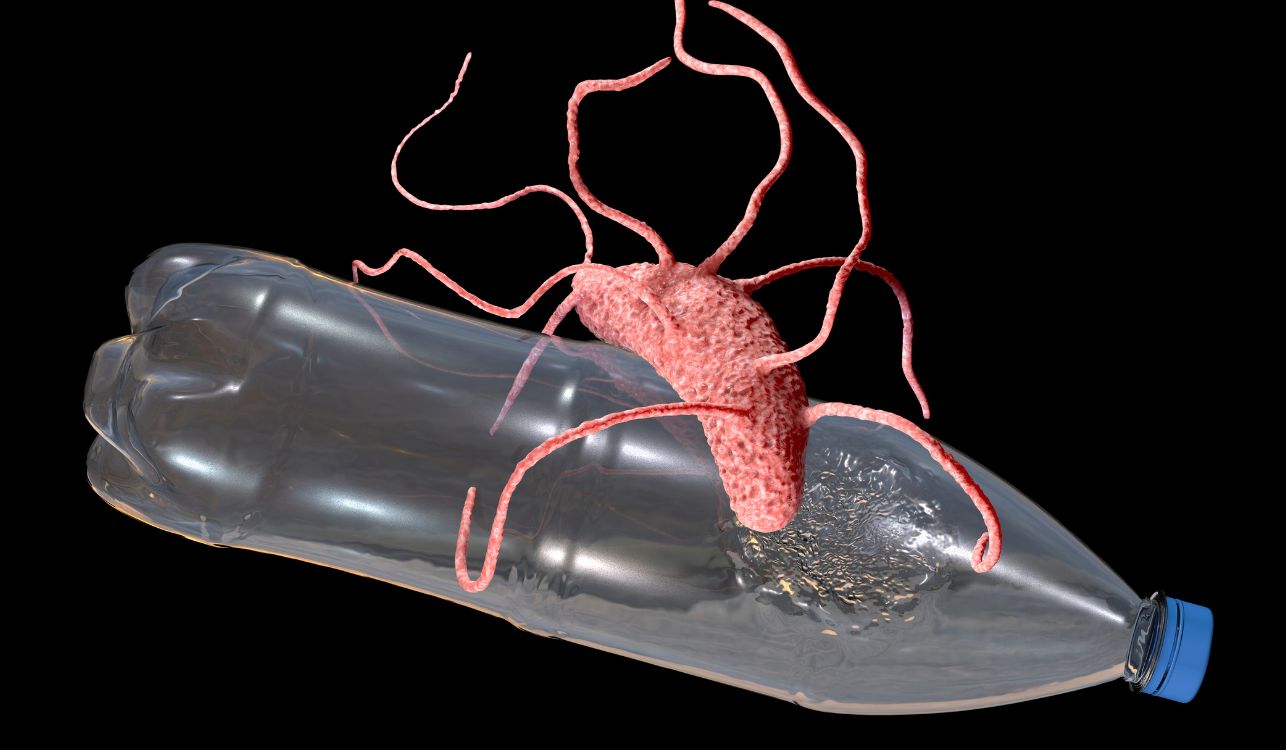
More than two decades after the discovery of Ideonella Sakaiensis bacterium in Japan, scientific research is continuing into how it might help with plastic waste management to solve the current global crisis.
© Kateryna Kon / Shutterstock.com
The team striving to convert the plastic-eating bacteria from a laboratory experiment into a means of dealing with millions of tons of almost indestructible waste say they are “just getting started” when it comes to the damage humans have caused to the planet.
What is Ideonella Sakaiensis?
Ideonella Sakaiensis is an unusual type of bacteria that has a staggering ability to break down and metabolise polyethylene terephthalate, known as PET - a type of plastic commonly used to manufacture items such as packing materials.
According to scientists, the bacteria has the potential to create more eco-friendly methods of dealing with plastic waste and there is a great deal of interest worldwide in the discovery. However, before it can be used with any certainty of success, researchers need to find out more about its genetics, biochemical characters and other characteristics.
With its name derived from Sakai, the Japanese city where it was discovered, researchers have found that Ideonella Sakaiensis bacterium commonly grows in a wide temperature range of between 15°C to 42°C, with the optimum range being 30°C to 37°C.
How was it discovered?
The bacteria genus Ideonella had been known to scientists since 1995, but its value in plastic waste disposal wasn’t realised until 2001. A group of scientists researching PET-contaminated sediments around Sakai’s plastic bottle recycling facility made the amazing discovery. Led by professor Kohei Oda, the team from Kyoto Institute of Technology found a slimy film of the bacteria growing in numerous trenches at the rubbish dump. They were amazed to find it had chewed its way through various pieces of plastic waste, including bottles and bric-a-brac.
At that time, the bacteria was known as Ideonella, but subsequently received its current name some years later, due to the location of the dump. It had naturally broken down the plastics, harvested the carbon contained within and turned it into energy, which was used to proliferate more bacteria. The scientists noted it had an amazing ability to grow, divide and move, eating all the plastic waste in its path.
Professor Oda, now an emeritus professor of microbiology at Kyoto Institute of Technology, said microbes had “probably already worked out a solution” to whatever scientific problems we faced, adding, “Watch this part of nature very carefully - it often has good ideas.”
How does Ideonella Sakaiensis break down PET plastic?
Prof Oda and his team discovered that around 75% of the PET had degraded to CO2. This meant the novel bacterium was naturally degrading the plastic and turning it into a carbon source that could potentially be used by other microorganisms. Initially found in soil heavily contaminated with PET, this lead to the conclusion its optimum habitat was moist oxygen-rich soil with enriched plastic waste and sewage sludge.
A report published by Microbe Notes in 2023, A Guide to Ideonella Sakaiensis Plastic-Eating Bacteria, described the threat of plastic waste on the environment as “catastrophic” due to its properties as a “persistent and not easily biodegradable material”. While a number of strategies have been put in place to control and manage it such as placing recycling bins in public spaces, and banning single-use plastics, the report suggests none of them are 100% effective.
The possibility of a bacteria eating plastic has been described as a “mighty option” to help combat the challenges of plastic waste management. For example, instead of more plastic waste finding its way into the ocean, where up to 199 million tonnes is already causing devastation to marine life, it could simply be “eaten” by the Ideonella Sakaiensis bacterium.
Challenges of using Ideonella Sakaiensis
In theory, using a plastic-eating bacteria has positive possibilities, but the practicalities are challenging for scientists at Kyoto Institute, who are still working on the project 23 years after their initial discovery. Scaling up the use of Ideonella Sakaiensis for industrial applications is a massive challenge, with the logistics of large-scale global implementation being complex. In addition, the degradation of the plastic by the bacteria occurs at a relatively slow rate on a large scale, while specific environmental conditions are needed for it to work.
Following their discovery, Prof Oda and his team spent 15 years conducting more experiments on the bacteria, before finally publishing their work in 2016 in the prestigious Science journal. The world was eager for a solution to the growing plastics crisis and the report met with global approval.
Describing the way the bacterium produced an enzyme to break down PET, commonly found in packaging and clothing, the Team’s report received more than 1,000 scientific citations. Today, it remains in the top 0.1% of all scientific papers, with Prof Oda and his one-time student Kazumi Hiraga, who is now a professor, continuing to conduct experiments.
During the past 50 years, the science of microbiology, which involves studying small organisms such as bacteria and some fungi, has evolved rapidly. Former president of the American Society for Microbiology Jo Handelsman has described Ideonella Sakaiensis as “possibly the most significant biological advance since Darwin’s discovery of evolution”.