
That said, you might be surprised to learn that picnics weren’t always so popular among the general public: they were originally an aristocratic pastime reserved for the wealthy, who were looking to escape the boredom of the drawing room!
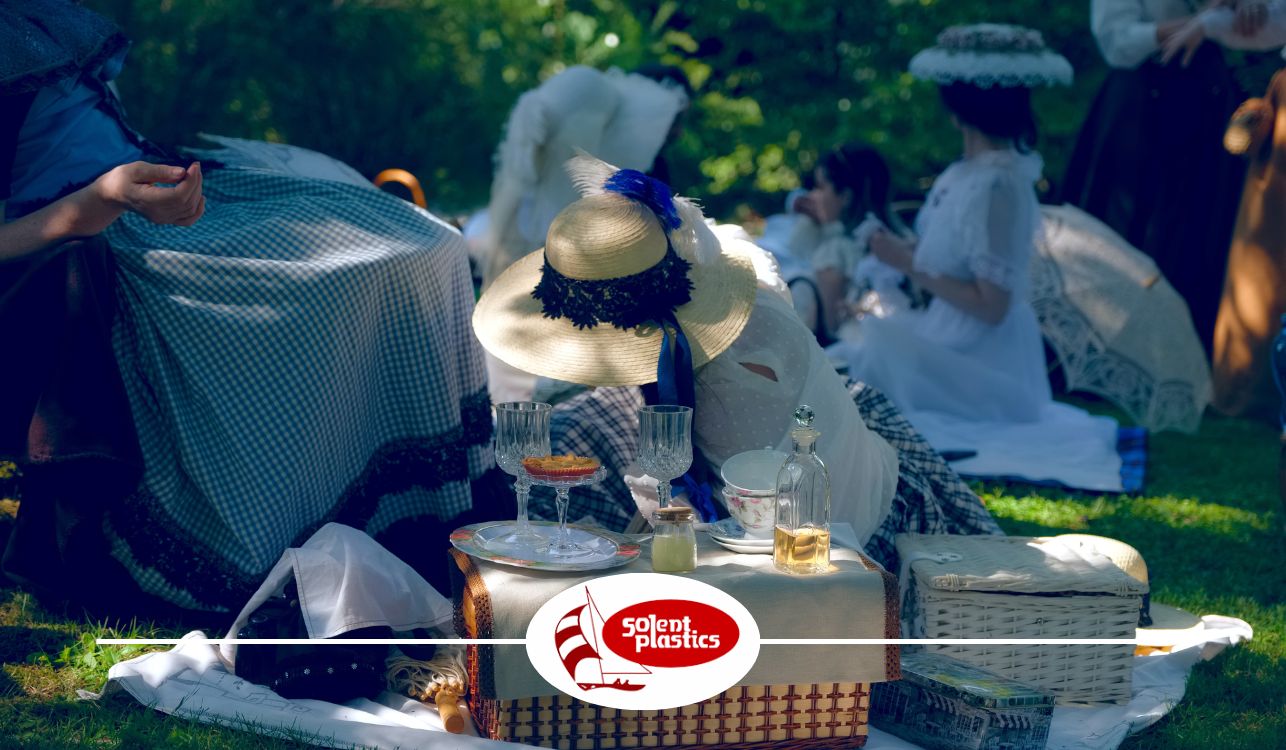
© MAURO SCARDONI / Shutterstock.com
There’s always a certain amount of optimism surrounding dining outdoors, as we’re largely dependent on the unpredictable weather. Author Claudia Roden, in her book, Picnics and Other Outdoor Feasts, describes how “fresh air and the liberating effect of nature sharpens the appetite.”
The average person in the UK goes on three picnics every year, according to the National Activity Providers’ Association. This equates to a total of 94 million picnics taking place annually across Britain, with the majority being in summer. July is designated National Picnic Month, so this is a great time to start preparing for your outdoor feast.
The history of the Great British picnic is fascinating, as this traditional activity, which can take place anywhere from local parks and woodlands to your own garden, was once viewed as a lavish occasion and an excuse for a huge feast.
British picnics history
Britain’s upper classes started the trend for picnics, as they were inspired to escape the formal dining room and eat outdoors, with the picturesque backdrop provided by nature rather than the luxury furnishings of their home.
The word “picnic” is believed to have its origins in 17th century France, as the 1692 book, Origines de la Langue Française, first used the word “pique-nique” to describe the practice of everyone bringing their own contribution to an organised meal. It was used in relation to diners in a restaurant who had taken their own wine as an accompaniment to the food, as it literally translated to "each pick a bit”. Over the years, it evolved into a broader meaning to describe the British pastime of having a meal outdoors.
During the 18th century, when picnics were reserved for the upper classes, luxury retailers began creating foods to tickle the tastebuds. Fortnum & Mason’s in London claimed to have invented that classic picnic item, the Scotch egg, in 1738.
The first picnics revolved around the Romantic arts movement and the aristocracy. English Romantic poet John Keats’ famous 1819 poem, To Autumn, containing the famous quote about the “season of mists and mellow fruitfulness”, was a popular ode in its day. It was said to have inspired the upper classes to move meals outside and escape the rigid formality of their lives.
In the servants’ quarters of Britain’s wealthiest households, cooks developed new recipes for setting cold meats in aspic jelly to make pies. Mrs Beeton’s Book of Household Management in 1861 published recipes for lavish picnic menus. She recommended one picnic should include a joint of cold boiled beef, a roast beef joint, ribs and shoulders of lamb, four roast fowls, one ham joint, two roast ducks, tongue, pigeon pies, veal and six lobsters just for the main courses… I almost want to add ‘and a partridge in a pear tree’!
For poorer people living in slums in the city, however, a picnic wasn’t something they had heard of. Moreover, they wouldn’t have been able to afford the luxury of packing food and drink into a hamper and setting off with their picnic blanket, as many could hardly afford to eat. Food poverty was a serious issue in 19th and early 20th century Britain, with research suggesting a “significant portion” of the working classes had malnutrition at some point. Around 50% of young working class men recruited into the British Army for the Boer War between 1899 and 1902 were so malnourished, they were unfit for service.
The average upper-class family’s one picnic would contain the equivalent of several months’ food for a typical working class family.
Transition of the picnic
Gradually, the activity of going for a picnic began to transcend the classes and became something that everyone could enjoy. The launch of the first British supermarket, opened by the London Co-operative Society in 1948, heralded a new era of cheaper and more convenient foods for consumers. The availability of pre-packed foods, sliced cooked meats, packets of pork pies, the Thermos flask and the transistor radio removed some of the exclusivity of early picnics. It meant almost anyone could pack a picnic of some kind - probably not as lavish as their Victorian ancestors, but certainly a tasty treat to eat outdoors. For the population of post-war Britain, a picnic became a symbol of freedom and their ability to sit outside amid the calm following the devastation of the 1939-45 world war.
Picnics had turned into a familiar family occasion for the wider public by the 1950s. Children of the 1960s and ‘70s have fond memories of their youth, when the staples of roast beef joints and lobster 100 years earlier were replaced by egg sandwiches, mini pork pies, cold cocktail sausages, sponge cake and bowls of jelly and cream.
In the book, Cider with Rosie, English author Laurie Lee described fond memories of his mother’s picnics, when “the milk turned sour, butter fried on the bread and cake crumbs stuck to the cucumber”, with wasps buzzing round and the jellies failing to set, so everyone drank them instead. Sand in the sandwiches during beach picnics is a common theme, with adults remembering the gritty taste of their egg mayo sandwiches. However, no-one minded and washing them down with a bottle of fizz was the answer.
Picnics in the 21st century
Today, the format of picnics has changed dramatically and they’ve become an activity that we can all enjoy. One of the major changes is a new emphasis on food safety, with the advent of airtight food storage containers.
The essentials of a Great British picnic today include quiche Lorraine, tortillas, wraps, pork and other meat pies, vegetarian options such as Quorn meats and burritos, salads, assorted sandwiches, Scotch eggs, sausage rolls, cheese and onion rolls and chicken drumsticks. Picnic ideas for sweet treats that aren’t too sticky include loaf cakes, individually wrapped brownies, tray bakes, shortbread and cookies, for example.
Picnic food storage containers are vital not only to stop foreign bodies infiltrating into the edibles, but also to help keep the picnic fresh. The days of curled warm sandwiches wrapped in a bit of tinfoil are long gone! In addition, sturdy plastic containers with lids are ideal to transport the food.